
Skin care
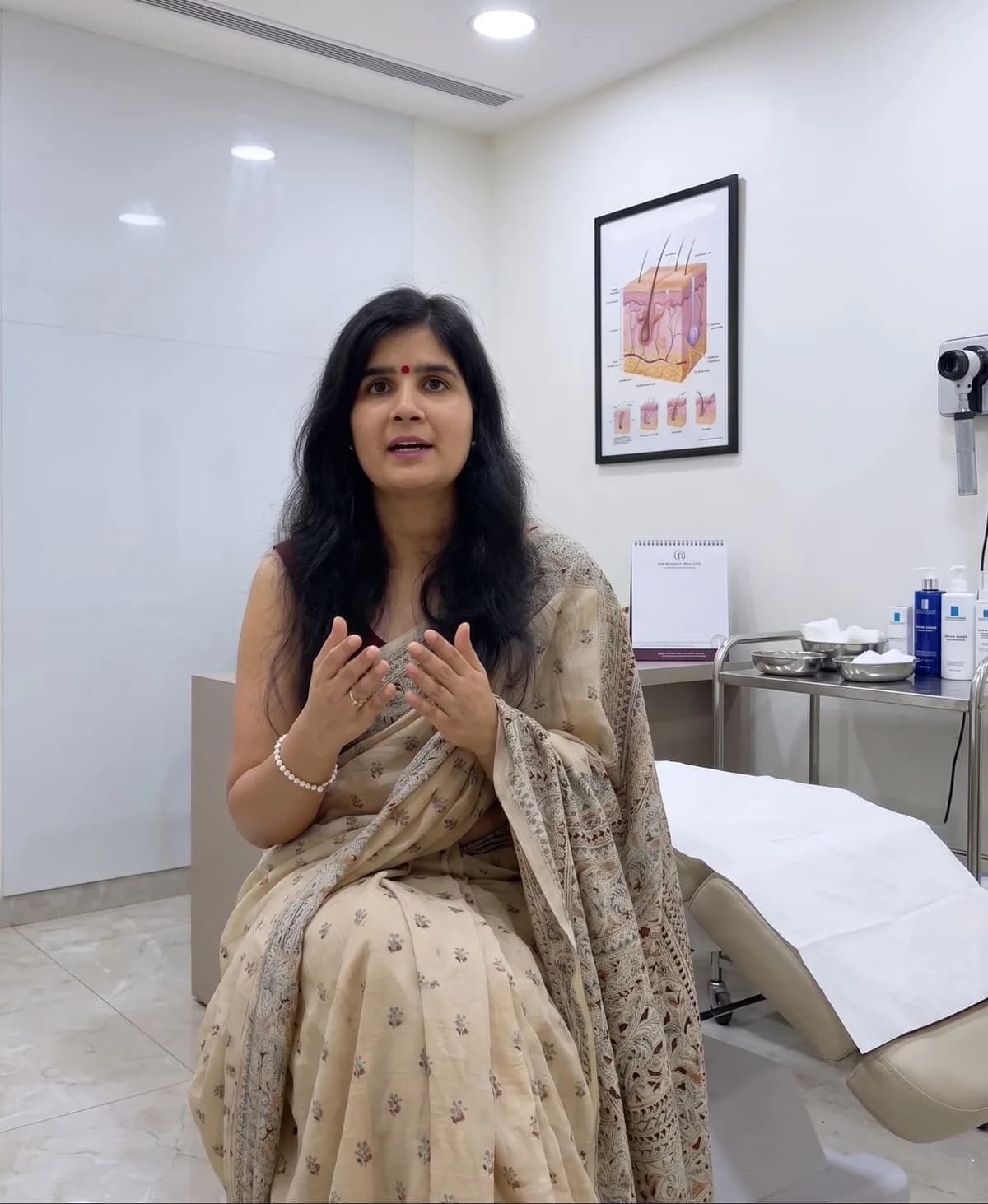
Dr. Neha Shukla
MD (Gold Medalist) · Dermatologist
Medical dermatology and doctor-led aesthetic treatment — acne, hair fall and pigmentation treated as medical problems, not packages.
4.8★1,163 Google reviews
Est. 2010 · Near Atria Mall, Sargasan Circle, Gandhinagar
Surgical techniques transfer melanocyte-containing skin into de-pigmented patches. It is one option among several, suits only vitiligo that has been genuinely stable, and does not promise complete repigmentation.
Vitiligo Surgery — doctor-administered at the hospital
Vitiligo happens when the pigment-producing cells in an area of skin are lost, leaving pale patches. Most vitiligo is managed medically first — topical and, where suitable, light-based treatment aimed at coaxing pigment cells to return. Surgery is considered only when that has been tried and localized patches have not responded, and the disease itself has been stable for a meaningful stretch of time.
Surgical techniques work by transferring melanocytes — the pigment-producing cells — from an area of normal skin into the de-pigmented patch, either as thin grafts of skin or as a cellular suspension prepared from a small donor sample. The transplanted cells can then repigment the treated patch over the following months.
The single most important requirement is stability: surgery is offered only for vitiligo that has stopped spreading and has shown no new patches or growth of existing ones for a meaningful period, generally around a year. Operating on active, spreading vitiligo tends to fail, and can trigger new patches at the donor and graft sites. This is one option among several rather than a default next step, and results vary by site, skin type and how long the patch has been present — the goal is realistic improvement in a chosen area, not a guarantee of complete, even repigmentation.
Dermatology at this hospital is self-pay. We do not have an insurance facility for skin — neither for aesthetic treatment, which no Indian health policy covers, nor for medical dermatology consultations and courses.
Technology
Suitability
Stability is assessed carefully before surgery is even discussed as an option — this is not offered to active, spreading vitiligo.
The process
A careful history of the patch — when it appeared, whether it has grown or changed, and whether new patches have appeared elsewhere. Photographs at intervals are often used to confirm stability before proceeding.
Whether surgery is appropriate at all, which technique suits the site and size of the patch, and a realistic sense of what degree of repigmentation to expect.
Performed under local anaesthesia. A small donor sample of normal skin is taken and, depending on the technique, either grafted directly or processed into a cell suspension and applied to the prepared recipient area.
The treated area is dressed and protected while it settles; the donor site heals separately.
Pigment appears gradually over weeks to months as the transplanted cells establish and spread. Progress is reviewed at intervals with photographs, since change over this timescale is otherwise hard to judge.
Aftercare
Next step
Two taps and your message is written. Dr. Neha's team replies with a time — in English, ગુજરાતી, हिन्दी or मराठी.
Book in three taps
1What is it about?
Pick what it's about and we'll write the message for you.
Questions
In English and ગુજરાતી, because the decision gets made in whichever one you think in.
Generally no new patches and no growth or change in existing patches for around a year. This is checked carefully through history and, where needed, photographs over time, because operating on vitiligo that is still active tends to fail and can trigger new patches.
સામાન્ય રીતે લગભગ એક વર્ષ સુધી કોઈ નવા ડાઘ ન થાય અને હાલના ડાઘમાં કોઈ વધારો કે ફેરફાર ન થાય. આ ઇતિહાસ અને જરૂર પડ્યે સમય જતાં ફોટોગ્રાફ્સ દ્વારા કાળજીપૂર્વક તપાસાય છે, કારણ કે હજુ સક્રિય વિટિલિગો પર સર્જરી કરવાથી સામાન્ય રીતે નિષ્ફળતા મળે છે અને નવા ડાઘ પણ થઈ શકે છે.
Often substantially, but not guaranteed to be complete or perfectly even. The degree of repigmentation varies by site, technique, and how long the patch has been present. This is discussed honestly before proceeding rather than promised as a certain outcome.
No. Medical and light-based treatment are tried first for most vitiligo. Surgery is considered later, specifically for stable, localized patches that have not responded to that treatment.
No. It repigments a specific stable patch; it does not change the underlying condition or guarantee that new patches will not appear elsewhere in the future. Ongoing monitoring and, often, continued medical care remain part of the picture.
As with any skin surgery: infection, scarring, uneven pigment take, and the possibility that grafted areas do not repigment as hoped. There is also a risk of new patches forming at the donor or graft site if the vitiligo turns out not to be as stable as assessed — which is why stability is checked so carefully beforehand.
Results & reviews
Dr. Neha Shukla holds 4.8★ across 1,163Google reviews. Treatment-specific patient stories for this page are being recorded with patients' written consent — see patient stories.
Skin care
MD (Gold Medalist) · Dermatologist
Medical dermatology and doctor-led aesthetic treatment — acne, hair fall and pigmentation treated as medical problems, not packages.
4.8★1,163 Google reviews
Send us a message describing what you would like treated. Dr. Neha's team will tell you what is realistic, and what it costs.
Near Atria Mall, Sargasan Circle, Gandhinagar · Replies in English, ગુજરાતી, हिन्दी or मराठी
Call 096015 65327, message us on WhatsApp, or get directions to Near Atria Mall, Sargasan Circle.